Moisture Control in Enzyme Cosmetic Manufacturing: Packaging, Fill Rooms, and Powder Handling
Enzyme exfoliants reward precision. In a cosmetic factory, the same protease, papain, bromelain, or blended enzymatic system can feel refined and controlled in one batch, then over-soft, under-performing, or unstable in another if moisture exposure is not managed from receiving through filling.
For a cosmetics manufacturer, moisture control is not just a storage topic. It shapes enzyme activity retention, powder flow, emulsion compatibility, preservative strategy, fill consistency, skin-feel, and finished-product shelf behavior. It is one of the quiet variables behind exfoliation consistency.
Corneora supports brands and contract manufacturers looking for an enzyme supplier for cosmetic exfoliant manufacturing with formulation-literate guidance, batch-ready documentation, and practical recommendations for scale-up environments.
Why moisture matters for cosmetic enzyme exfoliants
Most cosmetic enzymes are sensitive to water availability. That does not mean they cannot be formulated into elegant, high-performing exfoliating systems. It means the manufacturing pathway must be designed around controlled exposure.
Moisture can affect enzyme exfoliant production by influencing:
- Activity retention during storage before weighing, blending, or dispersion
- Powder flow and dusting behavior during charging and transfer
- Clumping or surface hydration in open containers or humid rooms
- Premature activation in anhydrous or low-water systems exposed to ambient humidity
- Cream, gel, or emulsion stability when enzymes are added too early or under harsh processing conditions
- Exfoliation uniformity across fills, retain samples, and market shelf life
- Sensory outcome, including perceived softness, residue, slip, and rinse profile
The goal is not to avoid water at every stage. The goal is to control when, where, and how the enzyme sees moisture.
Start with the intended product architecture
Moisture strategy should match the formula type. A rinse-off enzyme mask, low-water powder cleanser, anhydrous balm, hydrogel exfoliant, or cream-based renewal product will each require a different handling logic.
Powder cleansers and dry enzyme blends
Dry formats are attractive because they can protect enzyme performance until consumer activation. However, they are also vulnerable during powder handling.
Key controls include:
- Low-humidity weighing and blending windows
- Fast closure after dispensing
- Moisture-barrier primary packaging
- Desiccant evaluation where appropriate
- Low-shear blending to reduce heat and powder stress
- Clear line instructions for partial drum or bag reclosure
For powder formats, the manufacturing question is often: how do we keep the blend elegant, free-flowing, and active without creating a dusty or fragile process?
Creams, gels, and emulsions
In hydrated systems, enzyme exposure begins inside the formula. That places more emphasis on pH window, preservative compatibility, temperature history, and order of addition.
Useful controls include:
- Addition during cool-down rather than high-heat processing
- pH confirmation before enzyme addition
- Avoiding aggressive post-addition homogenization where possible
- Compatibility screening with chelants, botanical extracts, acids, salts, and fragrance systems
- Hold-time limits between enzyme addition and filling
- Finished-product stability observation under realistic storage conditions
For emulsions, the best result is usually achieved when enzyme addition is treated as a sensitive finishing step, not a bulk commodity charge.
Anhydrous balms and hybrid textures
Anhydrous textures can create premium sensorial products, but ambient humidity can still affect enzyme powders during charging and dispersion. Water introduced by hygroscopic raw materials, botanical powders, or poorly controlled storage can also change the behavior of the system.
Manufacturers should evaluate:
- Moisture contribution from excipients
- Dispersion uniformity in oils, esters, waxes, or surfactant concentrates
- Particle wetting and sedimentation behavior
- Packaging water vapor transmission
- Consumer-use exposure, especially jars used in bathrooms
Packaging: design for water vapor control, not just aesthetics
Packaging is part of enzyme performance. A refined jar or pouch that looks premium but allows excessive moisture ingress can compromise the formula before the consumer sees its best skin effect.
Primary packaging considerations
For enzyme cosmetic exfoliants, evaluate:
- Barrier performance against water vapor
- Closure integrity after repeated use
- Headspace management for powders and low-water systems
- Compatibility with emulsions, acids, oils, and fragrance components
- Dispensing style, especially for formulas exposed repeatedly to humid bathroom air
- Fill accuracy and seal quality at production speed
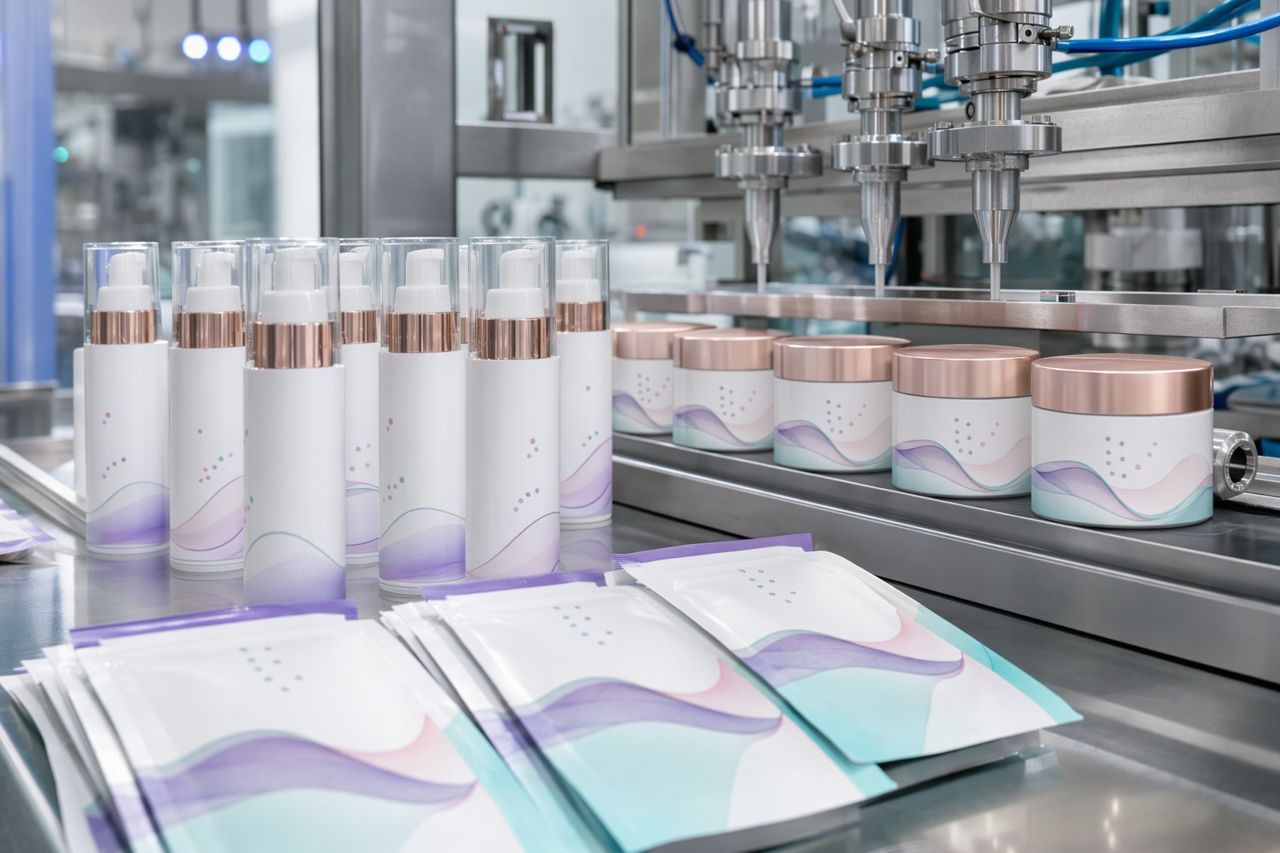
Airless pumps, laminated sachets, moisture-barrier tubes, induction-sealed jars, and unit-dose formats can all be relevant depending on the product concept. The right choice depends on the formula’s water sensitivity, viscosity, positioning, and consumer usage pattern.
Secondary packaging and shipping environment
Finished enzyme cosmetics may travel through warm, humid logistics conditions. Include shipping simulations and warehouse assumptions in the packaging review. A formula that passes benchtop stability can still show texture drift, scent shift, or reduced exfoliation consistency after poor transit conditions.
Fill rooms: humidity is a process parameter
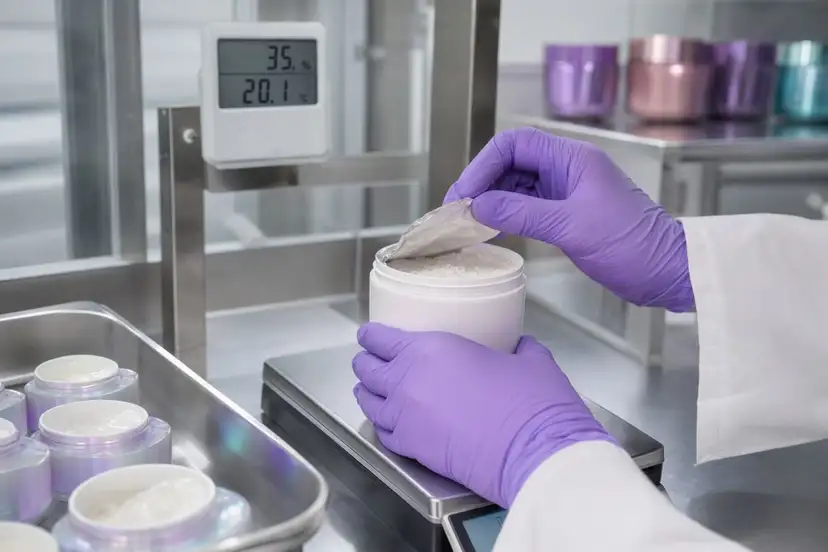
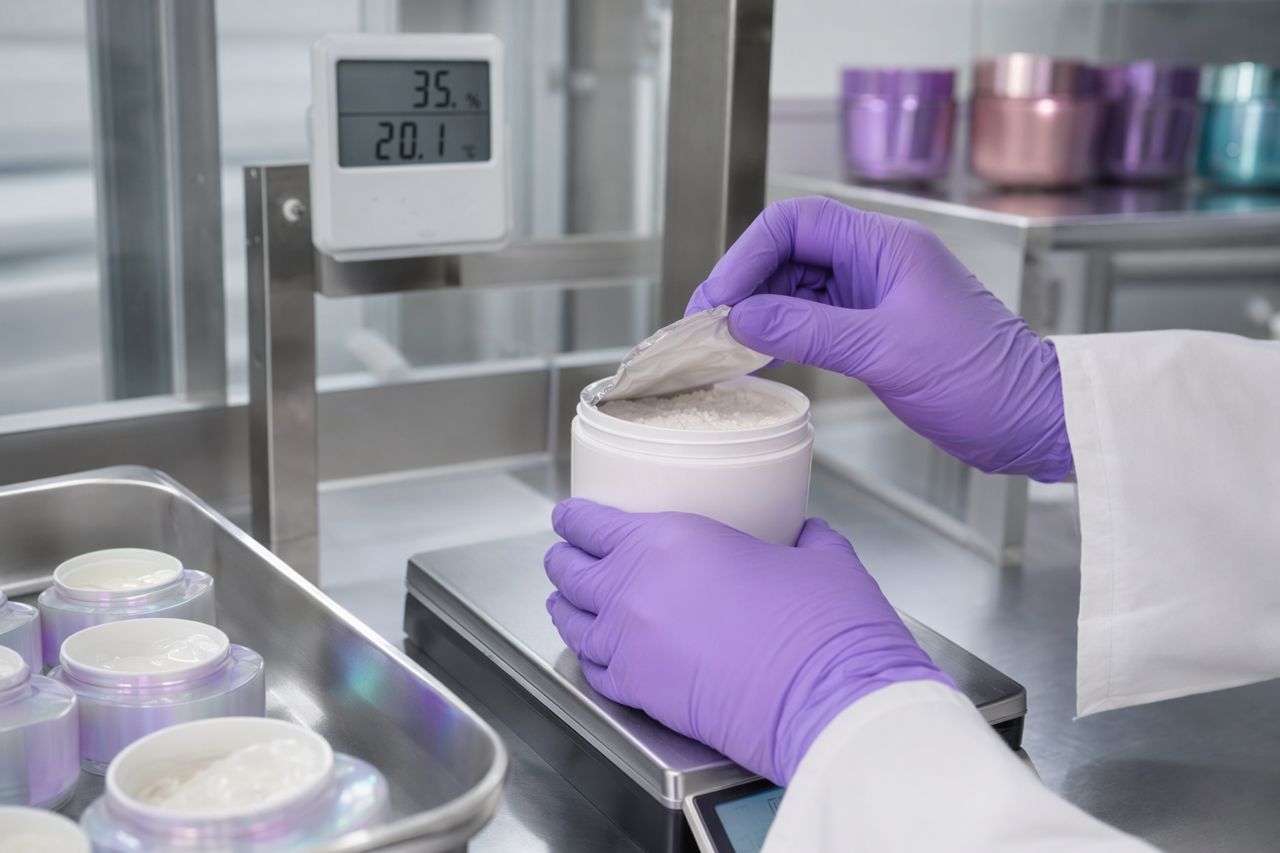
Fill-room humidity often receives less attention than temperature, viscosity, and line speed. For enzyme exfoliants, it deserves a defined operating range and escalation procedure.
Practical fill-room controls
A cosmetics manufacturer should consider:
- Monitoring humidity before and during enzyme weighing, blending, and filling
- Limiting open-container dwell time
- Using covered transfer vessels where possible
- Avoiding staging sensitive powders near washdown areas
- Separating steam-heavy cleaning windows from enzyme charging windows
- Training operators on rapid closure and clean, dry utensil use
- Documenting deviations when room conditions move outside the approved process window
These controls do not need to slow production dramatically. They create repeatability, which is the basis of premium skin-feel and dependable exfoliation.
Powder handling: protect flow, dispersion, and operator experience
Enzyme powders should be handled with respect for both performance and manufacturability. Moisture pickup can change powder behavior quickly, especially in humid rooms or during long staging periods.
Common factory issues
Watch for:
- Caking at the container surface
- Fine powder adhering to scoops or liners
- Uneven dispersion in the base
- Localized clumps in gels or creams
- Batch-to-batch variation in exfoliation feel
- Increased cleaning burden on transfer equipment
Handling practices that improve consistency
Recommended approaches include:
- Bring unopened material to room conditions before opening if condensation risk exists
- Open only the quantity needed for the batch step
- Reseal immediately after dispensing
- Use dry, dedicated tools
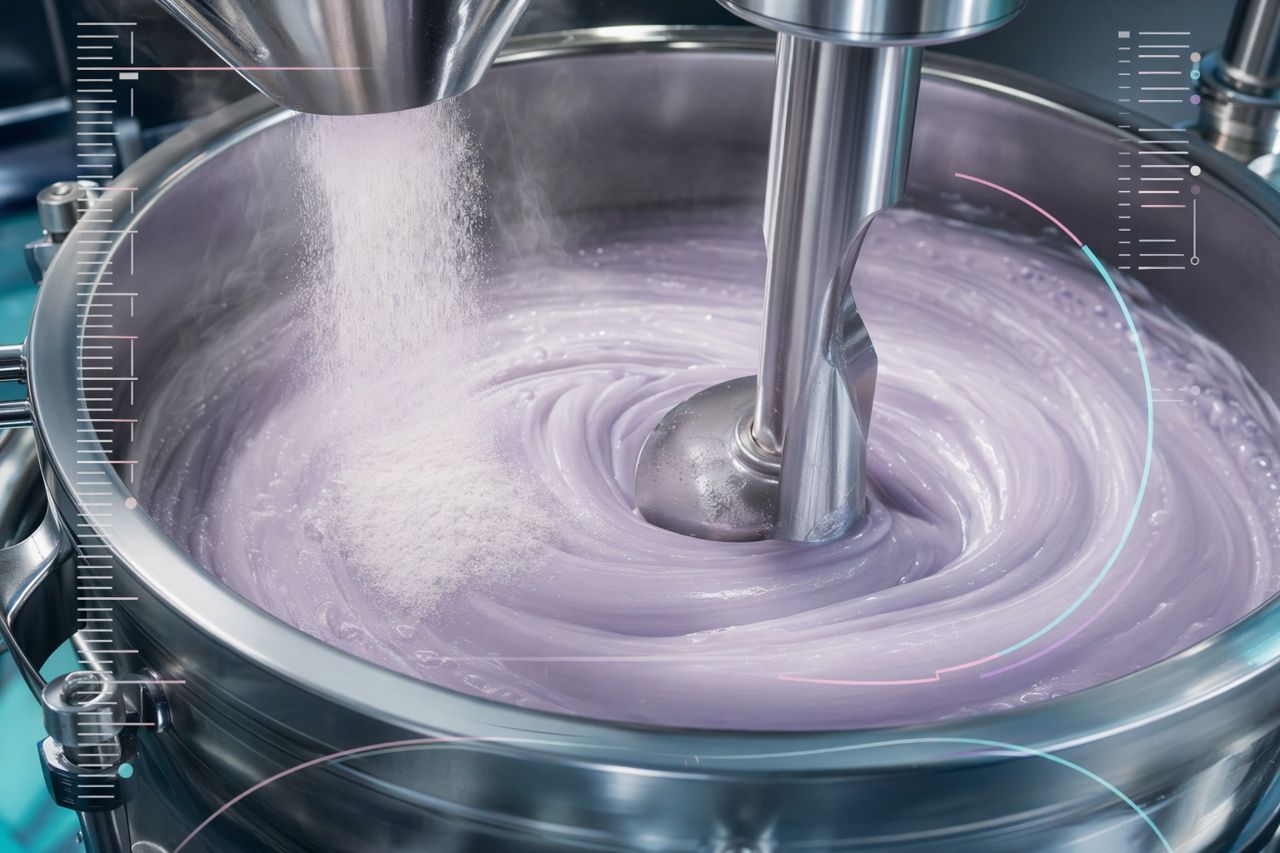
- Charge into a compatible pre-wet phase when appropriate
- Avoid long open-vessel hold times
- Define a maximum exposure time for sensitive powders
- Record lot, open date, and remaining container condition
The objective is smooth scale-up: a powder that behaves predictably from lab beaker to pilot kettle to full production.
pH window and moisture control work together
Moisture exposure determines when the enzyme begins interacting with the system. pH determines whether that interaction is productive, weak, or too aggressive for the formula architecture.
For enzyme cosmetic exfoliants, pH should be managed with the same discipline as viscosity and preservative compatibility. A formula may feel elegant at initial fill but drift in performance if pH, water activity, and packaging are not aligned.
A practical development sequence is:
- Define the target skin-feel and exfoliation intensity.
- Select the enzyme system and intended pH window.
- Screen compatibility with key functional ingredients.
- Evaluate moisture exposure during processing.
- Confirm packaging barrier and dispensing suitability.
- Run stability and use-pattern observations.
- Lock manufacturing instructions with clear hold-time and humidity controls.
Documentation buyers should request from an enzyme supplier
For production teams, the supplier relationship should reduce uncertainty. Documentation should help quality, regulatory, purchasing, and R&D teams make decisions without chasing missing details.
Ask for:
- Product specification sheet
- Safety data sheet
- Allergen, origin, and composition information where applicable
- Recommended storage and handling conditions
- Cosmetic suitability and formulation guidance
- Lot traceability support
- Stability and compatibility considerations
- Packaging and moisture-control recommendations for the intended format
Corneora provides cosmetics-focused support so formulation teams can move from ingredient evaluation to controlled manufacturing with fewer unknowns.
Scale-up checkpoints for enzyme exfoliant manufacturing
Before commercial launch, confirm that moisture control is reflected in the batch record and not left as informal operator knowledge.
Include in the manufacturing record
- Material acclimation instructions
- Room condition checks
- Open-container limits
- Addition stage and mixing intensity
- pH confirmation timing
- Post-addition hold time
- Filling sequence and closure requirements
- In-process observation criteria
- Retain-sample storage conditions
Include in quality review
- Appearance and odor
- pH trend
- Viscosity or texture behavior
- Dispersion uniformity
- Packaging seal integrity
- Exfoliation performance consistency by sensory or internal product standard
- Any signs of caking, separation, syneresis, or sedimentation
This is how an enzyme exfoliant becomes a controlled cosmetic product rather than a delicate lab success.
Corneora’s practical position
Corneora works with cosmetic manufacturers that need enzyme materials and guidance suited to real factory environments: fill rooms, powder rooms, scale-up meetings, documentation reviews, and finished-product stability gates.
If your team is developing a powder cleanser, enzyme mask, renewal cream, body polish, scalp exfoliant, or hybrid low-water texture, we can help align enzyme selection with pH window, packaging, moisture exposure, and manufacturing flow.
Request a quote
Planning an enzyme exfoliant launch or reformulation? Share your target product format, pH range, processing conditions, packaging concept, and annual volume estimate through the on-site request form.
Request a quote from Corneora for cosmetic enzyme supply, documentation, and moisture-control guidance tailored to your manufacturing process.