Packaging Choices for Enzyme Powder Cosmetics: Sachets, Jars, Sticks, and Airless Powder Systems
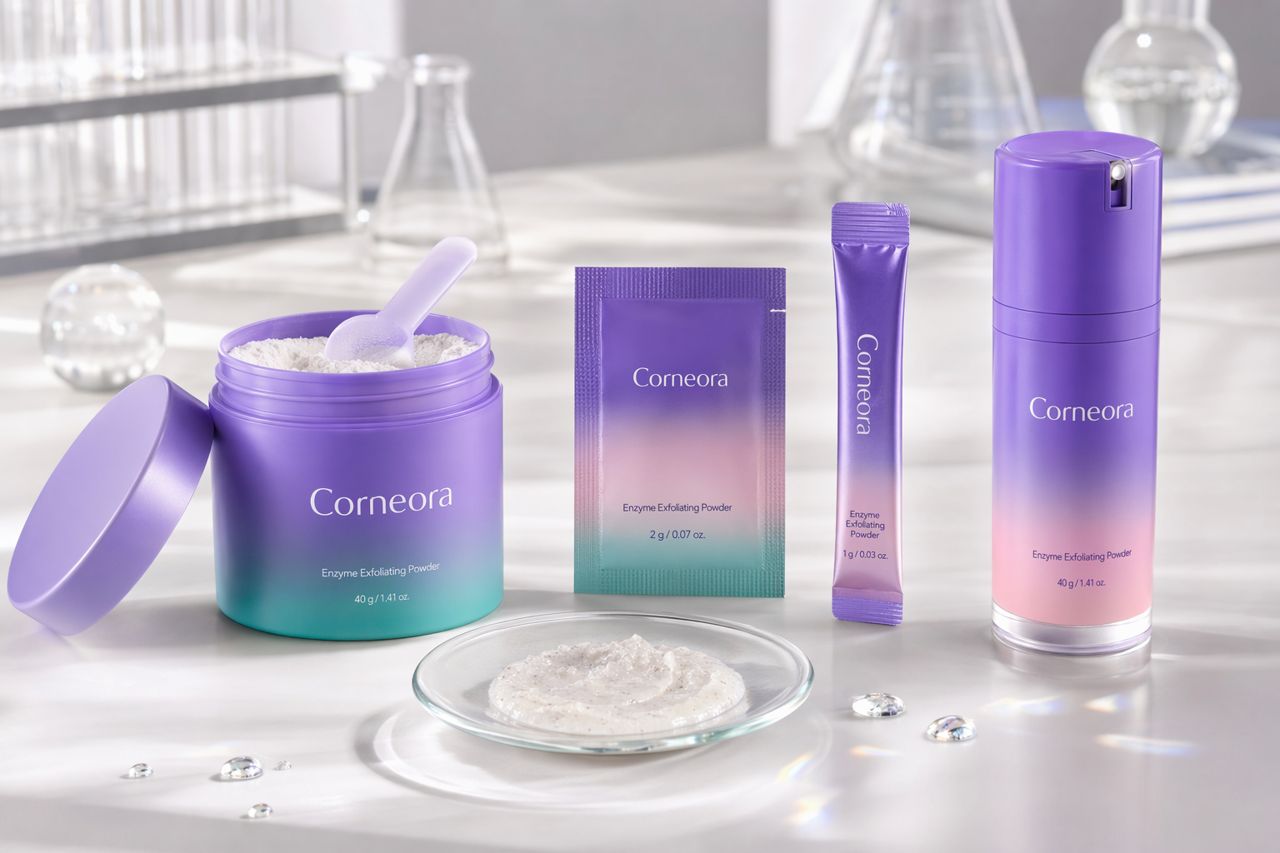
Enzyme powder cosmetics sit at a useful intersection: they can feel elegant at the sink, support controlled exfoliation, and avoid some of the stability compromises common in water-rich formats. But the packaging decision is not cosmetic. It determines moisture exposure, dose consistency, powder flow, consumer handling, and whether the finished product behaves predictably after scale-up.
For a cosmetics manufacturer developing enzyme cleansing powders, polishers, masks, or water-activated exfoliants, packaging should be specified early—alongside enzyme selection, carrier system, fragrance strategy, pH window, and documentation requirements.
Corneora works as an enzyme supplier for cosmetic exfoliant manufacturing with a focus on practical formulation behavior: activity retention, skin-feel, dispersion, stability under real packaging conditions, and manufacturing readiness.
Why packaging matters more for enzyme powders
Enzymes are selected for controlled cosmetic performance, but they are still sensitive functional ingredients. In powder cosmetics, the most important packaging questions are usually:
- How much moisture can reach the powder before use?
- Does the pack support repeatable dosing?
- Will the powder remain free-flowing during filling and consumer use?
- Does the opening expose the full batch to bathroom humidity?
- Can the format be filled cleanly at production speed?
- Is the user experience aligned with the intended exfoliation intensity?
- Can stability documentation support launch timelines and retailer expectations?
Good packaging protects the enzyme system while preserving the sensory promise: a soft powder that blooms cleanly with water, disperses without gritty drag, and leaves exfoliation feeling controlled rather than aggressive.
Sachets: strongest dose control, excellent trial format
Best suited for
- Single-use enzyme cleansing powders
- Travel formats
- Professional facial kits
- Sampling and launch discovery
- Premium measured-dose exfoliant masks
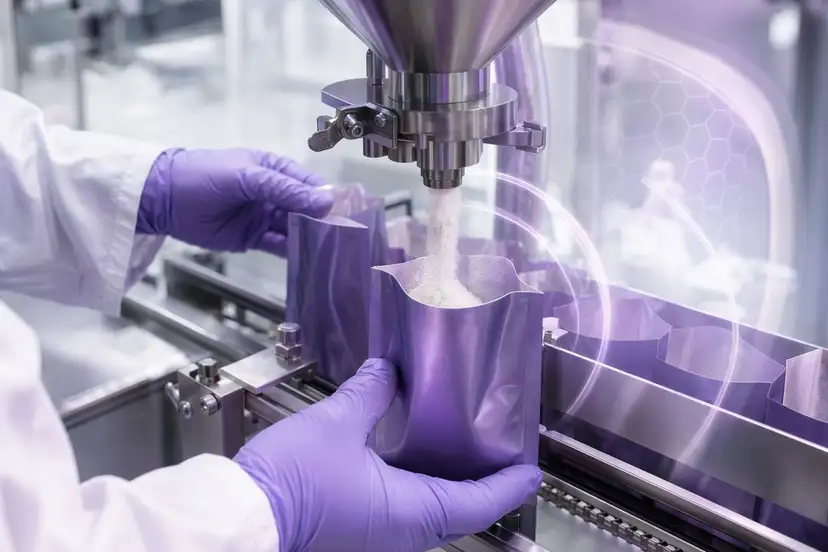
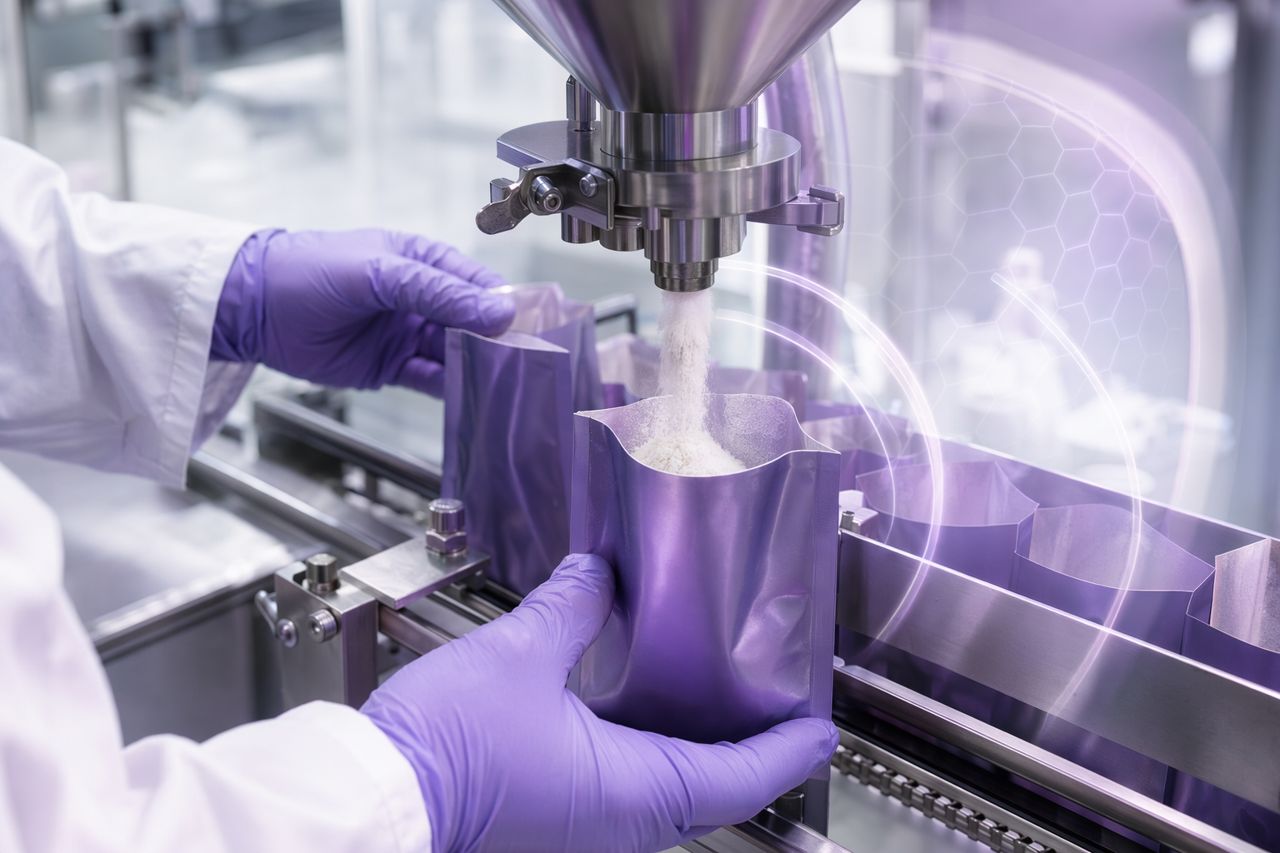
Sachets are often the most straightforward way to protect enzyme powder from repeated humidity exposure. Each dose remains sealed until use, which helps preserve powder freshness and supports consistent consumer application.
From a manufacturing perspective, sachets can also simplify dose control. The user is less likely to over-pour, under-dose, or contaminate the remaining product with wet fingers. For enzyme exfoliants, that matters because perceived performance depends on the amount of powder, the amount of water added, massage time, and the final pH environment on skin.
Advantages
- Strong protection against repeated moisture ingress
- Clear single-use dosing
- Useful for clinical-feeling, controlled positioning
- Good for premium sampling and travel
- Lower consumer handling variability
Watchpoints
- Laminate selection is critical for moisture barrier performance
- Powder must run well through sachet filling equipment
- Fine powders can create sealing-area contamination if flow is not controlled
- Sustainability perception may require careful material and messaging choices
- Sachet tear behavior affects user experience, especially with damp hands
Formulation implications
Sachets work well when the enzyme powder has a refined skin-feel and disperses quickly. Because the user receives a fixed dose, the formulation should tolerate reasonable variation in added water without becoming too thin, too pasty, or unevenly exfoliating.
Jars: familiar format, highest exposure risk
Best suited for
- Spa-style powder masks
- Larger home-use powders
- Products where ritual and sensorial scooping are part of the concept
- Formulas with robust anti-caking support and strong barrier closure design
Jars are visually premium and intuitive, especially for powder masks and cleansing grains. They offer excellent shelf presence and allow generous product sizes. However, they expose the remaining powder every time the consumer opens the pack.
For enzyme powders, this repeated exposure to humid bathroom air is the main concern. A jar may perform well in the lab, then behave differently in real use if the closure, liner, desiccant strategy, or powder flow profile is not engineered carefully.
Advantages
- Strong visual merchandising opportunity
- Familiar to skincare consumers
- Easy filling and inspection for many powder types
- Supports larger sizes and premium textures
- Good format for spatula-led ritual application
Watchpoints
- Repeated humidity exposure can affect flow and performance consistency
- Wet fingers can introduce localized moisture
- Wide-mouth openings increase environmental contact
- Scoops and spatulas must be specified, not assumed
- Headspace and closure design influence long-term powder condition
Formulation implications
Jar formats need powder systems that resist clumping and remain pleasant to dose over time. Particle size distribution, carriers, anti-caking strategy, fragrance loading, and enzyme compatibility should be assessed together. The formulation should also be forgiving if a consumer uses a slightly larger or smaller scoop.
Stick packs: precise, portable, and production-friendly
Best suited for
- Daily enzyme cleansing powders
- On-the-go exfoliation formats
- Dermatology-inspired routines
- Subscription or regimen packaging
- Minimalist measured-dose concepts
Stick packs combine many benefits of sachets with a more elongated, premium handling experience. They offer excellent dose discipline and are particularly useful when a brand wants a clear daily ritual: open, pour, activate, massage, rinse.
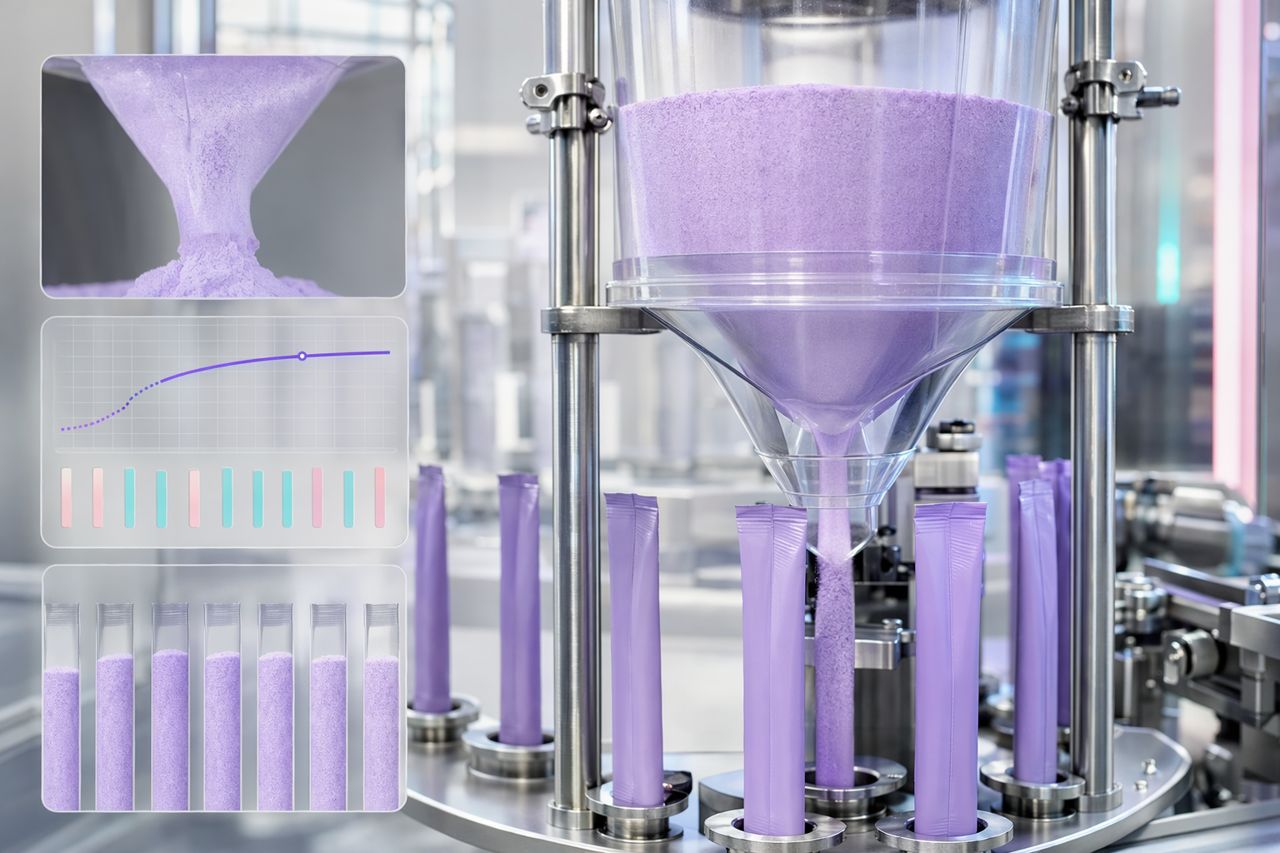
For cosmetics manufacturers, stick packs can be attractive when powder flow is predictable and the formula does not bridge, dust excessively, or separate during filling. The narrow pack geometry makes powder behavior especially important.
Advantages
- Strong portion control
- Clean user experience
- Good travel and regimen compatibility
- Lower repeated humidity exposure
- Efficient for daily-use positioning
Watchpoints
- Powder flow and filling accuracy must be confirmed at line speed
- Very low-density powders may require flow optimization
- Seals must remain clean and consistent
- Opening width influences pour behavior
- Fine powders can feel airborne if the formulation is not balanced
Formulation implications
Stick packs favor cohesive but free-flowing powders that pour neatly into the palm without dusting. Enzyme distribution must remain uniform through blending, transport, hopper residence, and filling. This is where scale-up trials matter: a bench blend that looks elegant may not behave the same in a high-speed packaging environment.
Airless powder systems: premium control with engineering complexity
Best suited for
- High-end enzyme exfoliant powders
- Water-activated treatment cleansers
- Products requiring repeat-use dose protection
- Brands seeking a refined, hygienic dispensing experience
- Packaging concepts that merge skincare luxury with technical credibility
Airless powder systems can provide an elegant solution when a brand wants repeat-use convenience without the open exposure of a jar. Depending on the mechanism, the pack may dispense a measured amount while limiting humidity contact with the remaining bulk powder.
This format can feel especially premium for enzyme exfoliants because it communicates control: the product is protected, the dose is intentional, and the consumer does not need to scoop from an open container.
Advantages
- Premium consumer perception
- Improved hygiene compared with open jars
- Potentially better humidity management for repeat-use packs
- Supports controlled dispensing
- Strong alignment with clinical-luxury positioning
Watchpoints
- Mechanism compatibility with powder flow must be tested early
- Dispensing consistency may change with powder density and humidity exposure
- Tooling, lead time, and minimum order quantities can be significant
- Cleaning and filling procedures require careful validation
- The pack must not grind, compact, or segregate the powder during use
Formulation implications
Airless powder systems demand close collaboration between formulation, packaging, and filling partners. The powder must move through the mechanism cleanly, dispense consistently, and retain enzyme performance across realistic storage and use conditions. If the formula contains sensorial powders, soft-focus minerals, botanical carriers, or fragrance, each component should be evaluated for its effect on flow and dispensing.
Packaging comparison for enzyme powder cosmetics
| Format |
Dose control |
Humidity protection |
Premium perception |
Scale-up complexity |
Best use case |
| Sachets |
High |
High |
Medium to high |
Medium |
Sampling, travel, professional kits, single-use exfoliants |
| Jars |
Low to medium |
Low to medium |
High |
Low to medium |
Ritual masks, larger home-use formats |
| Stick packs |
High |
High |
Medium to high |
Medium |
Daily measured-dose cleansers and exfoliants |
| Airless powder systems |
Medium to high |
Medium to high |
Very high |
High |
Premium repeat-use enzyme treatments |
What to evaluate before choosing a pack
1. Moisture barrier and real-use humidity
A packaging material can look appropriate on a specification sheet but still underperform if the product is stored in humid bathrooms, opened frequently, or filled under uncontrolled plant conditions. Enzyme powder projects should evaluate both unopened stability and use-simulation stability.
2. Powder flow during filling
Powder flow is not just a production concern. It affects dose consistency, line speed, seal quality, and finished-goods appearance. During development, evaluate whether the powder:
- Bridges in hoppers
- Dusts during transfer
- Segregates after vibration
- Clings to sealing areas
- Compacts under pressure
- Changes flow after humidity exposure
3. Enzyme distribution uniformity
Enzyme powders require consistent distribution across the finished batch. The carrier system, blending order, particle size profile, and packaging process all influence uniformity. This is especially important for sachets and stick packs, where each unit should deliver a consistent experience.
4. Activation experience on skin
The best packaging protects the powder, but the consumer judges the product at activation. The powder should wet out quickly, form an elegant paste or foam depending on the concept, and deliver controlled exfoliation without scratchy drag.
Consider the full user sequence:
- Open or dispense
- Add water
- Rub between palms or apply to damp skin
- Massage
- Rinse
- Perceive smoothness, softness, and comfort
5. pH window after water addition
For enzyme exfoliant manufacturing, the relevant pH environment is the hydrated product during use. Packaging cannot correct a poorly designed pH window, but it can preserve the dry system so the formula behaves as intended when activated.
6. Documentation for commercial readiness
B2B enzyme powder projects typically require more than a sample and a concept claim. Plan documentation early, including ingredient identity, cosmetic-use suitability, allergen and impurity considerations where applicable, stability support, and manufacturing handling guidance.
Practical recommendations by launch strategy
If speed to market is the priority
Start with sachets or stick packs. They offer strong dose discipline and reduce the risk of repeated humidity exposure. They also make sampling and consumer education easier.
If luxury ritual is the priority
Consider a jar only if the formula has strong flow stability and the closure system is carefully specified. Use a spatula or scoop, evaluate desiccant options, and test repeated opening in humid conditions.
If premium technical differentiation is the priority
Explore airless powder systems early. This route can create a distinctive product experience, but it requires more engineering time, supplier coordination, and compatibility testing.
If sustainability perception is central
Do not treat sustainability as a late-stage packaging claim. Barrier performance, material reduction, refill concepts, mono-material feasibility, and product waste prevention should be assessed together. A pack that protects enzyme performance and prevents product spoilage may support a more responsible total system than a weak barrier that leads to poor consumer experience.
How Corneora supports enzyme powder packaging decisions
Corneora helps cosmetics manufacturers connect enzyme selection with packaging reality. We look at the dry powder system, the intended exfoliation profile, the pH window during activation, sensory targets, carrier compatibility, moisture sensitivity, and production behavior.
Our work is practical: helping your team move from promising bench samples to a cosmetic enzyme powder that fills cleanly, stores reliably, activates elegantly, and delivers consistent skin-forward performance.
Request a quote
Planning an enzyme powder exfoliant in sachets, jars, sticks, or an airless powder system? Share your target format, product concept, expected launch volume, and desired sensory profile through the on-site request a quote form. Corneora will help you identify an enzyme solution and documentation path aligned with cosmetic manufacturing realities.