Sensory Design for Exfoliating Powders | Corneora
A formulation-led guide to foam, slip, grit, rinse, and afterfeel in enzyme exfoliating powders for cosmetic manufacturing scale-up.
Request pricing A formulation-led guide to foam, slip, grit, rinse, and afterfeel in enzyme exfoliating powders for cosmetic manufacturing scale-up.
Request pricingPowder exfoliants live or die in the first thirty seconds of use. The consumer adds water, feels the powder bloom, watches foam form, senses the grit level, then judges the rinse and afterfeel. For a cosmetics manufacturer, that sensory arc is not only a marketing detail. It is a formulation control problem.
Enzyme exfoliating powders are especially sensitive to this balance. The enzyme must remain stable in a low-moisture format, disperse quickly on wetting, support consistent exfoliation, and coexist with surfactants, starches, clays, amino-acid cleansing systems, sensory powders, fragrance, and preservation strategy. When the powder is scaled from bench to plant, small shifts in particle size, moisture exposure, blending order, and packaging protection can change the consumer experience.
Corneora supports cosmetic manufacturers that need an enzyme supplier for cosmetic exfoliant manufacturing with formulation-literate ingredient guidance, scale-up awareness, and documentation that helps procurement, R&D, quality, and regulatory teams move in the same direction.
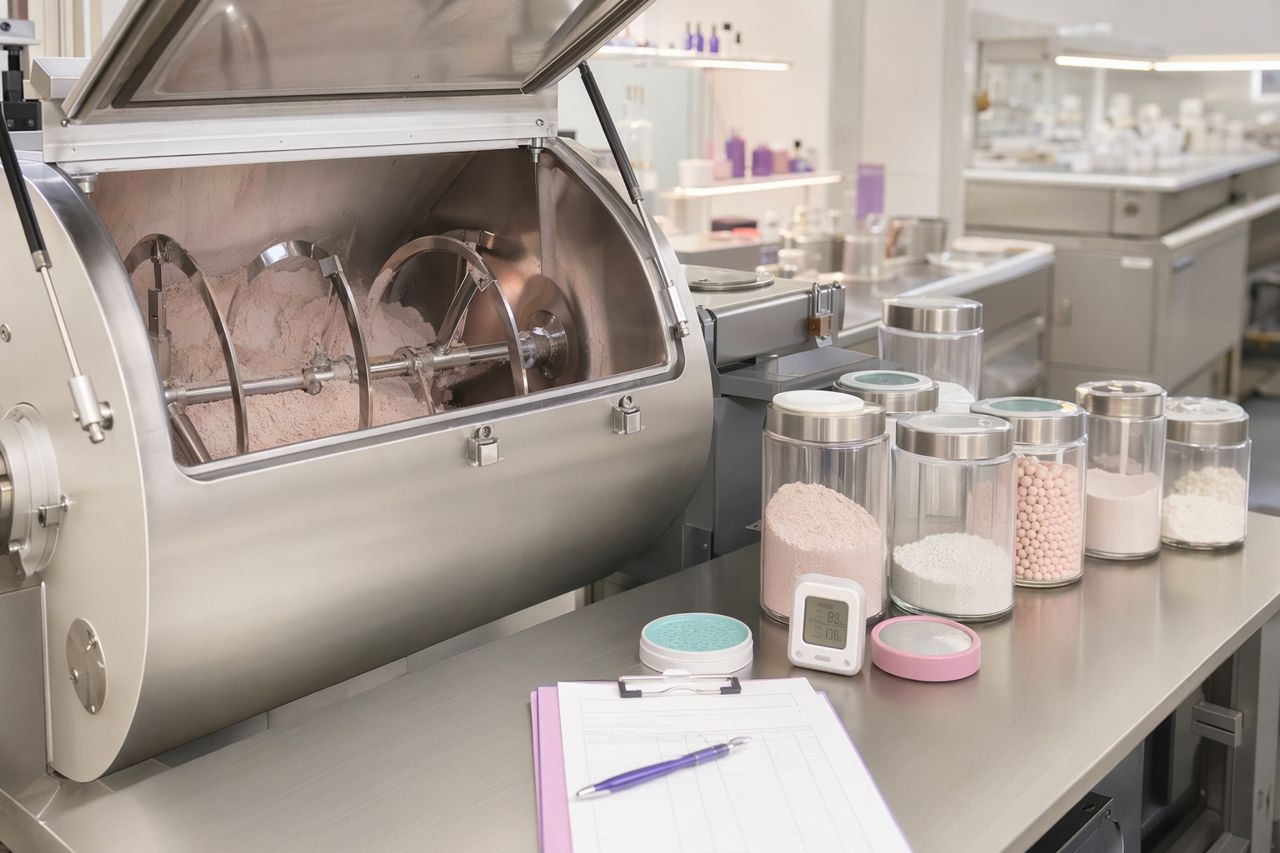
A powder exfoliant is not a dry version of a face wash. It has its own product architecture. Every component influences how the powder flows, how it hydrates, how it foams, how it feels during massage, and how cleanly it leaves the skin.
Before screening enzyme options, define the intended sensory signature:
This target guides enzyme selection, carrier strategy, particle profile, surfactant system, pH window, and stability testing. If the sensory brief is vague, the formulation tends to drift: too much drag, too little foam, gritty hot spots, or an afterfeel that feels dusty rather than polished.
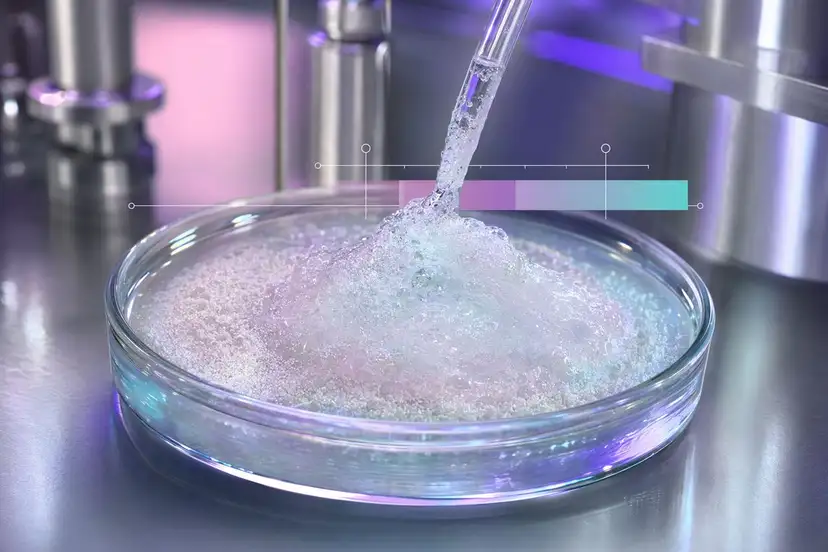
Foam is often the first signal of product satisfaction. In enzyme powder exfoliants, foam must be designed around wetting speed and massage time.
A high-foam profile can communicate cleansing efficacy, but excessive surfactant aggressiveness may create tightness after rinse or reduce the refined skin-feel expected from a premium exfoliant. A low-foam profile can feel elegant and clinical, but if it hydrates slowly, consumers may overwork the skin before the enzyme dispersion is even.
For manufacturing teams, foam consistency depends on:
Corneora works with formulation teams to position enzyme inputs within the powder system so that exfoliation performance is not isolated from the tactile experience.
Slip is the glide that lets a powder exfoliant feel controlled rather than abrasive. It is created by the interaction of hydrated powders, mild surfactants, polymers, amino acid derivatives, starches, and fine mineral or botanical particles.
Enzyme exfoliation can help reduce reliance on aggressive physical scrub perception, but it does not replace the need for mechanical comfort. The base should allow fingers to move smoothly over skin with enough cushion to avoid patchy pressure.
Formulators should evaluate slip in three stages:
When slip is well designed, the enzyme component can do its work within a more uniform contact field. That improves the perception of controlled exfoliation and reduces the risk of uneven user behavior.
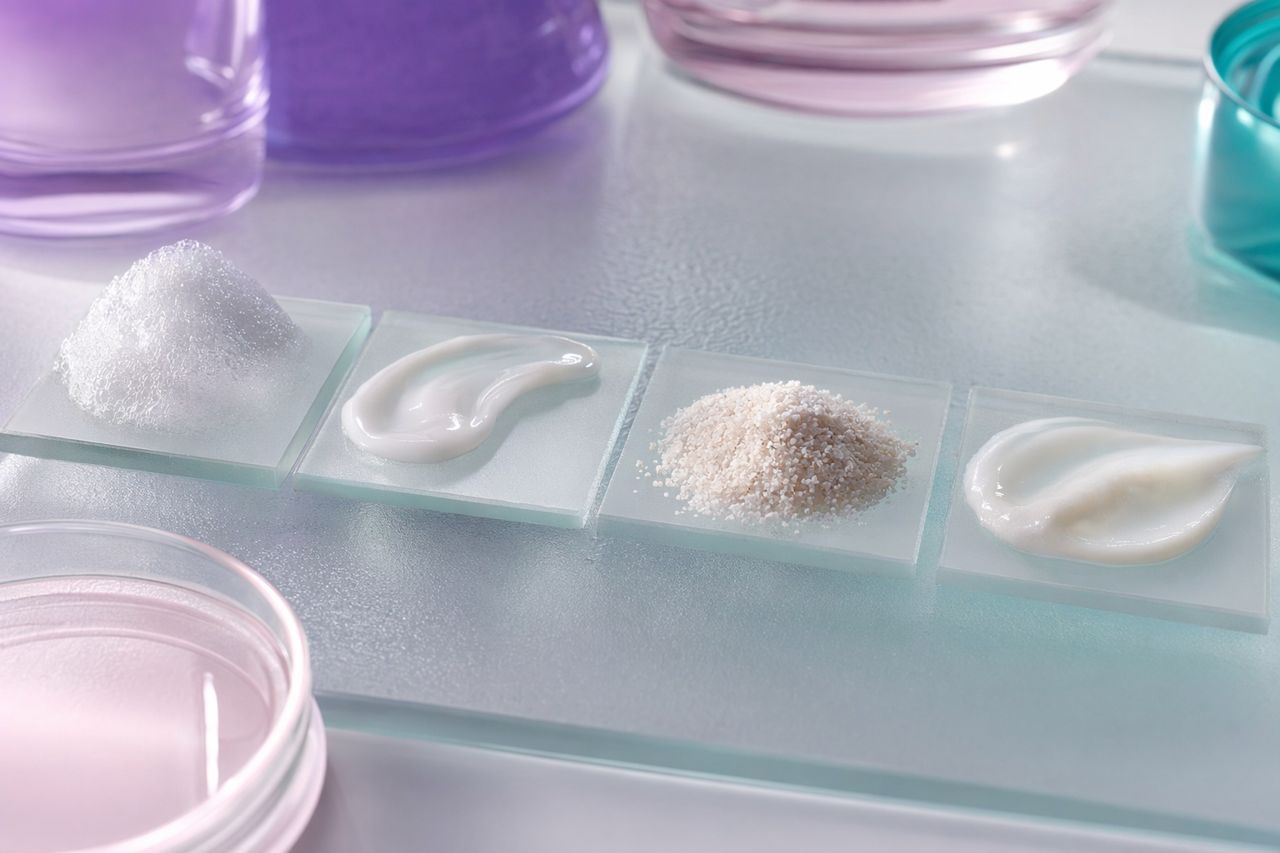
Grit can be a brand asset or a defect. Some product concepts need visible grains to signal exfoliation. Others require near-invisible polishing for sensitive-positioned or daily-use products.
The challenge is consistency. Consumers forgive texture when it feels intentional. They notice immediately when a powder has hard specks, sandy drag, clumps, or uneven abrasive zones.
In production, grit issues often come from:
Enzyme systems allow manufacturers to reduce the dependence on harsh physical exfoliants, but the complete sensory matrix still needs particle engineering. The target is not simply less grit. It is a grit profile that matches the claim, price point, and use frequency.
Rinse is where the consumer decides whether the formula feels elegant. A powder can foam beautifully and still fail if it leaves a chalky film, slippery residue, squeaky finish, or tight after-rinse sensation.
Rinse behavior is influenced by surfactant selection, insoluble solids, starch load, clay type, and the level of film-forming or cushioning ingredients. The enzyme selection should fit the intended pH window and water-activation profile without forcing the base into a rinse character that conflicts with the brand concept.
For factory scale-up, rinse consistency should be checked across:
A controlled rinse profile helps reduce consumer complaints and supports repeat purchase, especially for premium powders where expectations are high.
Afterfeel is the memory of the product. It should match the promise on pack: polished, luminous, smooth, soft, clean, balanced, or cushiony.
For enzyme exfoliating powders, afterfeel is shaped by both exfoliation behavior and the residue profile of the base. A refined formula should not depend on harsh immediate smoothness. It should deliver a skin-forward finish that feels deliberate and repeatable.
Key afterfeel questions for R&D teams include:
This is where enzyme choice, powder architecture, and packaging protection converge.
In anhydrous or low-moisture powders, enzyme stability is closely tied to water control, temperature exposure, carrier compatibility, and packaging barrier. A powder that performs beautifully in the first month but loses activation character or develops clumping later will not meet manufacturing or consumer expectations.
Corneora helps teams think through practical stability factors without turning the formulation process into guesswork:
The goal is a product that feels as designed, not only when freshly made, but throughout its commercial shelf life.
Before approving an enzyme exfoliating powder for production, align R&D, purchasing, QA, and manufacturing around these questions:
These questions reduce late-stage reformulation and help teams avoid the common gap between a beautiful lab prototype and a robust factory product.
Corneora supplies enzyme solutions for cosmetic manufacturers building exfoliating powders, cleansing powders, and hybrid sensorial exfoliant formats. Our focus is practical: stable ingredient selection, formulation fit, batch consistency, and the documentation needed by industrial buyers.
We understand that your team is not buying an isolated ingredient. You are building a finished product with a specific skin feel, production route, claim territory, and margin target. That is why our support is framed around the real variables that affect launch: activity retention, pH window, compatibility, handling, stability, and sensory outcome.
A one-minute faceless explainer accompanies this article, showing enzyme droplets entering pearlescent powder-to-foam systems, abstract skin-cell layers gently lifting, precision dosing into cream-like hydrated bases, and refined exfoliant textures folding under controlled lab light. On-screen subtitles reinforce the sensory stages: foam, slip, grit, rinse, and afterfeel.
If you are developing an enzyme exfoliating powder, cleansing powder, or premium polish format, Corneora can help you evaluate supply fit, documentation, and scale-up requirements.
Request a quote through the on-site form and tell us your target format, pH window, base type, packaging plan, and launch timeline.

Tell us your application and volume — we reply with pricing and lead time.